
"Clarissa" By The Esiri Brothers Brought Lagos, Memory, And Woolf To Cannes
Directed by Nigerian twin filmmakers Arie Esiri and Chuko Esiri, Clarissa is not just another Nigerian film reaching an international stage. It is a cultural signal. A Lagos-set reimagining of Virginia Woolf’s Mrs Dalloway, the film premiered at Cannes 2026 in the Directors’ Fortnight section, where it stood among 19 selected features from across the world. Shot on 35mm across Lagos and Delta State, the film follows Clarissa, a society hostess preparing for an evening gathering while old emotions, old friends, and buried choices begin to orbit her present life.
By Asteroid Media
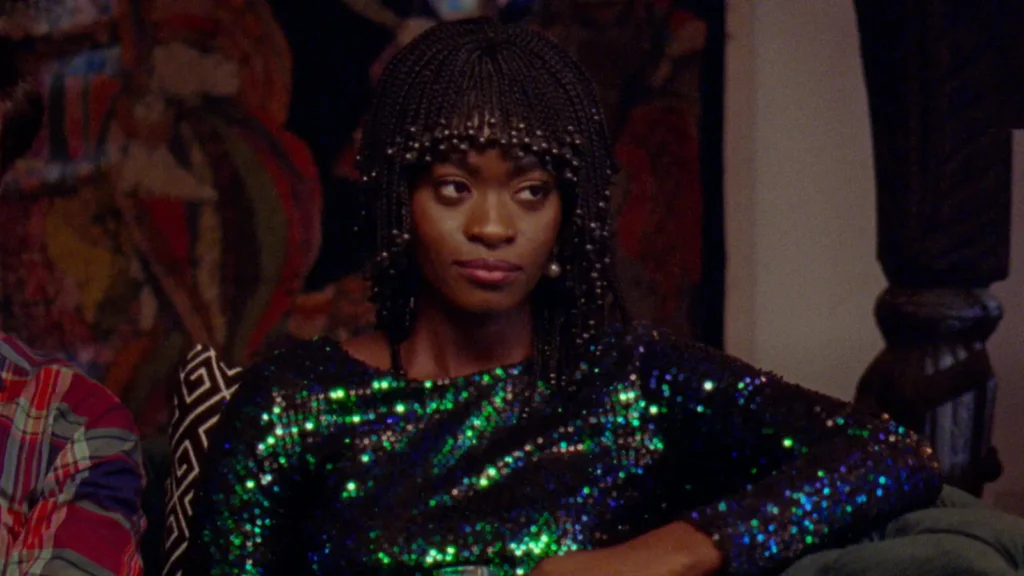
At its surface, Clarissa carries the elegance of high society: the Lagos home, the party, the old friends returning with their ghosts dressed in polished clothing. But beneath that surface is something more volatile. The Esiri brothers are interested in the private weather of people who have learned how to perform composure. Clarissa, played by Sophie Okonedo, becomes the centre of a world where class, regret, desire, and national memory quietly collide. The Guardian described the film as a melancholy drama carried by commanding performances, set between modern-day Lagos and Abraka in southern Nigeria, 30 years in the past.
This is where the film becomes bigger than adaptation. Clarissa does not simply move Woolf from London to Lagos. It translates emotional repression into a Nigerian register. The party becomes more than a social event. It becomes a ritual of remembering. The old friends become planets returning to an orbit they once escaped. The house becomes a polished chamber where privilege cannot completely silence history.
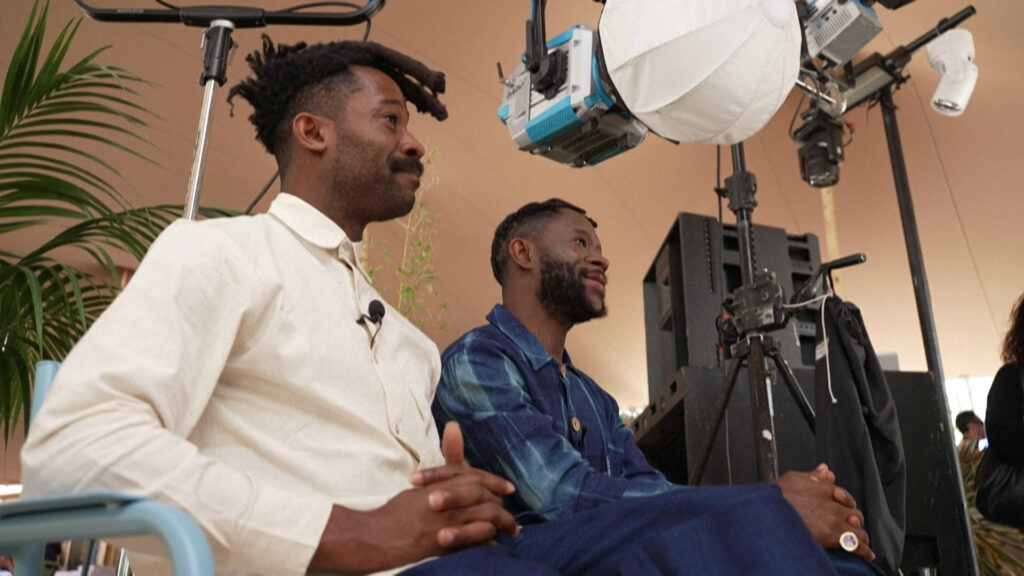
That tension is exactly what makes the film feel urgent. In interviews around Cannes, the Esiri brothers spoke about how Woolf’s world of public composure and private longing could speak directly to contemporary Nigerian life. Chuko Esiri described Clarissa as “the sun” of the film’s universe, with Peter as one of the planets revolving around her, while Arie connected the social codes of 1920s Britain to present-day Nigeria.
The cast gives the project its global voltage. Sophie Okonedo leads as Clarissa, with David Oyelowo as Peter, Nikki Amuka-Bird as Sally, and younger versions of these characters played by India Amarteifio, Toheeb Jimoh, and Ayo Edebiri. That lineup alone tells you something about the film’s ambition. This is Nigerian cinema speaking in a global language without abandoning its own accent.
For Arie and Chuko Esiri, Clarissa also feels like a continuation of the cinematic grammar they began building with Eyimofe (This Is My Desire), their Berlin-premiered debut known for its grounded portrait of migration and working-class Lagos. But where Eyimofe looked closely at survival from the street level, Clarissa turns its gaze toward the insulated rooms of the elite. The lens has shifted, but the question remains: what does Nigeria do to the dreams of its people?
For Asteroid, this is the frequency that matters: Lagos as cinema, Nigeria as mythology, African storytelling as something expansive enough to hold Woolf, war, class, romance, regret, and the quiet violence of becoming who you were expected to be. This aligns with Asteroid’s own Lagos-born, globally tuned editorial world, where culture is treated as impact, orbit, and transmission.
Clarissa lands at Cannes not as a visitor, but as evidence. Nigerian cinema is no longer circling the conversation. It is inside the atmosphere now, changing the temperature.